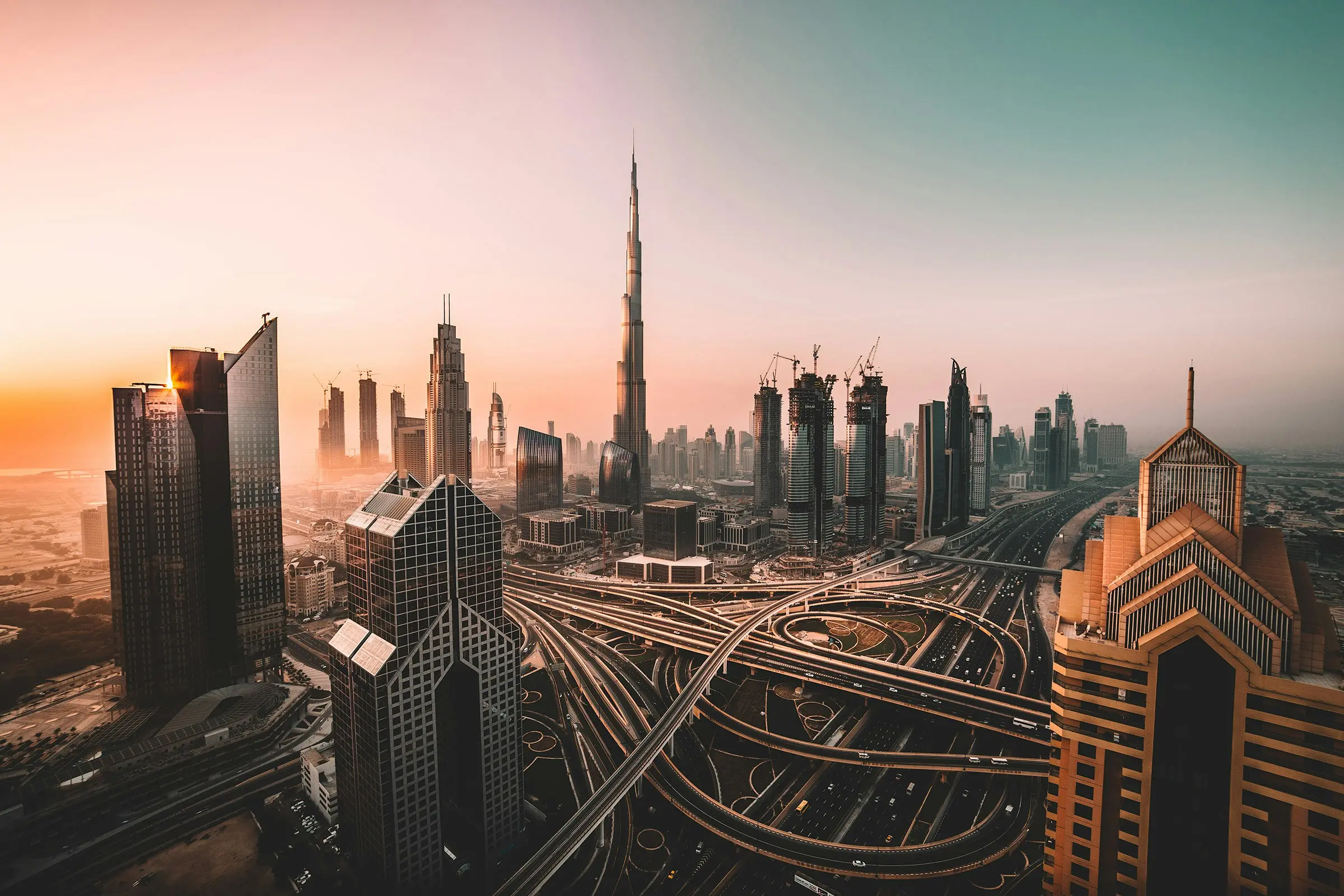
Inside Dubai's $10M+ Fortress: Why the Ultra-Rich Are Ignoring Global Geopolitics in 2026
Explore how Dubai's $10M+ ultra-luxury real estate sector has completely decoupled from broader market trends and geopolitical noise in 2026.

Key Takeaways
- Global Wealth Magnet: European and Asian billionaires are driving demand, utilizing Dubai as a tax-free, safe-haven fortress for wealth preservation.
- Branded Residences: High-net-worth buyers are flocking to ultra-luxury branded residences (e.g., Bugatti, Baccarat, Armani) which offer irreplicable prestige and privacy.
- Supply Constraint: The severe lack of waterfront mega-mansions (Palm Jumeirah, Jumeirah Bay Island) ensures absolute price rigidity, regardless of interest rates.
TL;DR: The Decoupling of Prime Dubai Real Estate
- Complete Decoupling: The $10M+ ultra-luxury segment in Dubai has officially detached from mid-market trends and regional geopolitical noise.
- Global Wealth Magnet: European and Asian billionaires are driving demand, utilizing Dubai as a tax-free, safe-haven fortress for wealth preservation.
- Branded Residences: High-net-worth buyers are flocking to ultra-luxury branded residences (e.g., Bugatti, Baccarat, Armani) which offer irreplicable prestige and privacy.
- Supply Constraint: The severe lack of waterfront mega-mansions (Palm Jumeirah, Jumeirah Bay Island) ensures absolute price rigidity, regardless of interest rates.
A Market of Two Halves
When analyzing the bayut dubai real estate market trends 2026, analysts quickly realize they are looking at two entirely different ecosystems. The mid-market is normalizing into a phase of sustainable, logical growth.
But the ultra-luxury market—properties priced at $10 million (AED 36.7M) and above—is playing by an entirely different set of rules. This sector has successfully "decoupled" from the broader economy. It does not react to mortgage rate hikes, and remarkably, it completely ignores regional geopolitical tensions like the US-Iran conflict.
The Safe Haven for Ultra-High-Net-Worth Individuals
Why is the ultra-luxury segment immune to regional noise? Because for the global elite, Dubai is not seen as a Middle Eastern city; it is viewed as a global sovereign fortress.
When uncertainty strikes in Europe (economic taxation, political shifts) or Asia (regulatory crackdowns), billionaires do not sit in cash. They seek hard, irreplicable assets in neutral territories. Dubai’s "Safe Haven" status is the primary driver of this $10M+ boom.
These buyers are purchasing properties entirely in cash, bypassing the banking sector's volatility. They are buying for legacy, wealth preservation, and lifestyle, not for a quick 8% rental yield.
Where is the Smart $10M+ Moving?
The focus of ultra-luxury capital has narrowed to severe supply-constrained areas and branded monoliths:
- The Private Islands: Palm Jumeirah remains the crown jewel, but Jumeirah Bay Island (home to the Bulgari Resort) and the emerging Maritime City are seeing record-breaking price-per-square-foot transactions.
- Branded Residences: The collaboration between elite real estate developers and global luxury brands has created a new asset class. Buildings bearing the names of Pagani, Mercedes-Benz, and Six Senses provide a level of service and prestige that transcends traditional real estate, acting as secure vaults for generational wealth.
The 2026 Outlook for Prime Property
As we navigate 2026, the dubai real estate market trends 2026 clearly indicate that the ceiling for ultra-luxury has not yet been found. As long as global geopolitical complexity persists, the world's wealth will continue to funnel into Dubai's most exclusive penthouses and beachfront estates, proving that at the absolute top of the market, stability is the ultimate luxury.
Related AiGentsRealty resources
What to verify before you act
Before making an investment decision, verify the latest pricing, transaction evidence, rental demand, service charges, payment-plan terms, and exit liquidity for the specific property. Market-wide guidance can help you shortlist opportunities, but final due diligence should happen at project, building, and unit level. Compare the total cost of ownership and avoid assuming that historic returns will repeat automatically.
Sources and further reading
Practical due diligence checklist
Use this article as a shortlist filter, then validate the specific asset before making a decision. Confirm the current asking price against recent transactions, check the total acquisition cost rather than only the headline price, and review service charges, payment-plan obligations, handover assumptions, and resale liquidity. For off-plan purchases, verify escrow registration, construction progress, developer delivery history, and the exact clauses in the sales and purchase agreement. For ready property, inspect the unit condition, building maintenance, occupancy profile, parking, views, and realistic rental demand.
Before committing, compare at least three alternatives in the same budget band. The strongest option is usually the one where location, entry price, floor plan, developer quality, future supply, and exit strategy all align. Avoid relying on generic area averages or marketing brochures when unit-level evidence is available.
How to turn this guide into a decision
Use this article to form a shortlist, then test each option against current evidence. Check recent transactions, live asking prices, payment terms, service charges, handover assumptions, rental demand, and resale liquidity. A good Dubai property decision depends on the exact asset, not only the area, developer, or broad market narrative.
For investors, compare total acquisition cost and holding cost before looking at headline returns. Include DLD fees, agency fees, service charges, maintenance, vacancy, furnishing, management, and potential exit costs. For end users, compare livability factors such as commute, noise, parking, amenities, building quality, and future construction nearby.
The safest decision process has four steps: verify the data, compare alternatives, pressure-test the downside, and confirm all terms in writing. If a property still looks attractive after those checks, it is a stronger candidate. If the numbers only work under optimistic assumptions, keep searching or negotiate better terms.