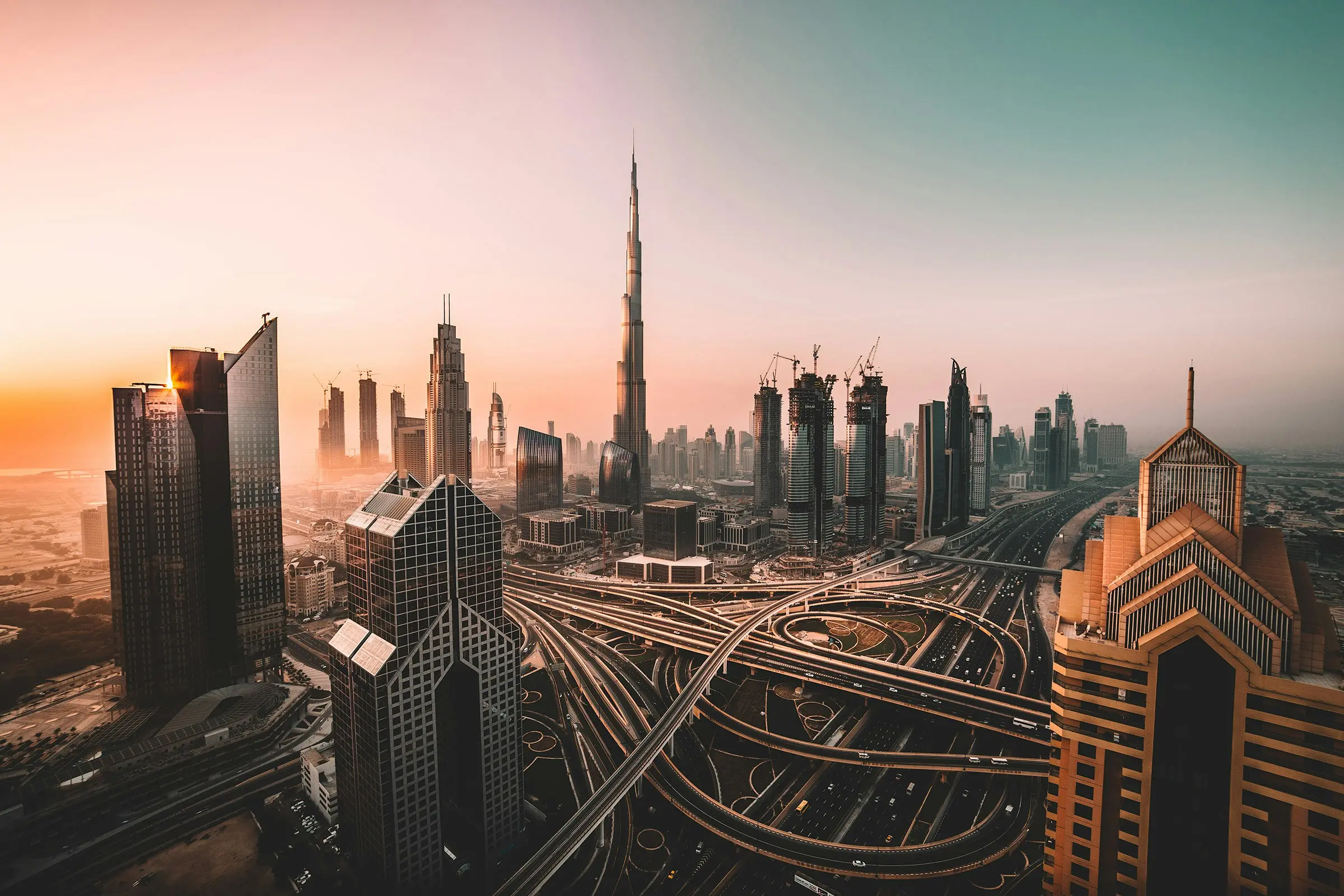
D33 Marches On: Why Dubai's Mega-Projects Ignore Short-Term Regional Conflicts
How Dubai's massive long-term infrastructure projects, including Al Maktoum Airport and D33, continue uninterrupted despite regional geopolitical noise.

Key Takeaways
- TL;DR: Infrastructure Beats Geopolitics Uninterrupted Progress: Construction on massive initiatives like the Al Maktoum International Airport expansion continues at full speed.
- The D33 Vision: Dubai's Economic Agenda (D33) is a 10-year master plan that is systematically insulated from short-term regional conflicts.
- Government Spending: State-backed infrastructure spending remains aggressive, signaling ultimate economic confidence to foreign investors.
TL;DR: Infrastructure Beats Geopolitics
- Uninterrupted Progress: Construction on massive initiatives like the Al Maktoum International Airport expansion continues at full speed.
- The D33 Vision: Dubai's Economic Agenda (D33) is a 10-year master plan that is systematically insulated from short-term regional conflicts.
- Government Spending: State-backed infrastructure spending remains aggressive, signaling ultimate economic confidence to foreign investors.
- The Ground Reality: While news cycles focus on conflict, the physical reality in Dubai is characterized by cranes, concrete, and rapid development.
The Disconnect Between News and Reality
If you watch the global news cycle, the Middle East appears volatile. But if you stand on the ground in Dubai South, the reality is entirely different. One week into the latest regional tensions, the cranes haven't stopped, the concrete is still pouring, and the billions of dollars allocated to Dubai's future are still being actively deployed.
The Al Maktoum Airport Expansion
The most glaring proof of Dubai’s long-term focus is the continuous, aggressive development of the Al Maktoum International Airport. Set to be the world's largest airport, this $35 billion project is the cornerstone of Dubai South.
Over the last seven days, logistics and construction contracts have proceeded without a single delay. The UAE government understands that global logistics and aviation dominance operate on decade-long timelines, completely independent of temporary geopolitical flashpoints.
D33: A Roadmap Immune to Noise
The Dubai Economic Agenda (D33) aims to double the size of the city's economy by 2033. This involves massive foreign direct investment (FDI) and the integration of next-generation tech industries.
For the international investors funding these sectors, Dubai is viewed similarly to Singapore or Switzerland—a politically neutral execution hub. The ongoing conflict has not resulted in a withdrawal of FDI; rather, government tenders and international partnerships have continued to be signed throughout the week.
What This Means for Real Estate Investors
For property investors, government infrastructure spending is the ultimate safety net.
- Job Creation: Mega-projects require talent. Talent requires housing.
- Capital Appreciation: Properties located near these expanding hubs (like Dubai South and Expo City) benefit from inevitable appreciation as the infrastructure matures.
- Risk Mitigation: The fact that the state is not hoarding cash in response to the conflict, but rather spending it aggressively on development, proves that internal risk assessments view the regional situation as a non-threat to domestic stability.
In Dubai, the future is literally being built today, and it takes more than regional noise to stop the momentum.
Related AiGentsRealty resources
What to verify before you act
Before making an investment decision, verify the latest pricing, transaction evidence, rental demand, service charges, payment-plan terms, and exit liquidity for the specific property. Market-wide guidance can help you shortlist opportunities, but final due diligence should happen at project, building, and unit level. Compare the total cost of ownership and avoid assuming that historic returns will repeat automatically.
Sources and further reading
Practical due diligence checklist
Use this article as a shortlist filter, then validate the specific asset before making a decision. Confirm the current asking price against recent transactions, check the total acquisition cost rather than only the headline price, and review service charges, payment-plan obligations, handover assumptions, and resale liquidity. For off-plan purchases, verify escrow registration, construction progress, developer delivery history, and the exact clauses in the sales and purchase agreement. For ready property, inspect the unit condition, building maintenance, occupancy profile, parking, views, and realistic rental demand.
Before committing, compare at least three alternatives in the same budget band. The strongest option is usually the one where location, entry price, floor plan, developer quality, future supply, and exit strategy all align. Avoid relying on generic area averages or marketing brochures when unit-level evidence is available.
How to turn this guide into a decision
Use this article to form a shortlist, then test each option against current evidence. Check recent transactions, live asking prices, payment terms, service charges, handover assumptions, rental demand, and resale liquidity. A good Dubai property decision depends on the exact asset, not only the area, developer, or broad market narrative.
For investors, compare total acquisition cost and holding cost before looking at headline returns. Include DLD fees, agency fees, service charges, maintenance, vacancy, furnishing, management, and potential exit costs. For end users, compare livability factors such as commute, noise, parking, amenities, building quality, and future construction nearby.
The safest decision process has four steps: verify the data, compare alternatives, pressure-test the downside, and confirm all terms in writing. If a property still looks attractive after those checks, it is a stronger candidate. If the numbers only work under optimistic assumptions, keep searching or negotiate better terms.
How to use this market update
Use this article as a signal for what to investigate next, not as a standalone forecast. Market headlines can move faster than actual buyer behavior, so validate the topic against live transaction evidence, current listings, payment-plan changes, mortgage conditions, rental demand, and developer launch activity. Where the article discusses risk, compare short-term sentiment with the underlying supply pipeline and the depth of end-user demand in the relevant areas.
For buyers, the practical question is whether the update changes negotiation power, timing, or asset selection. For sellers, it should inform pricing discipline and the level of evidence needed to support an asking price. For investors, translate the headline into a unit-level model: entry price, total fees, service charges, vacancy, rental realism, and likely exit audience. A useful market view should lead to a clearer shortlist and a better due-diligence checklist, not a rushed decision.